For years, SaaS and B2B brands have relied on “best software” listicles as a cornerstone of their SEO strategy. The logic was simple: create a page titled “Best CRM Software” or “Top Project Management Tools,” place your product at the top, and capture valuable search traffic.
But new research suggests that strategy may be backfiring in Google’s AI-powered search experience.
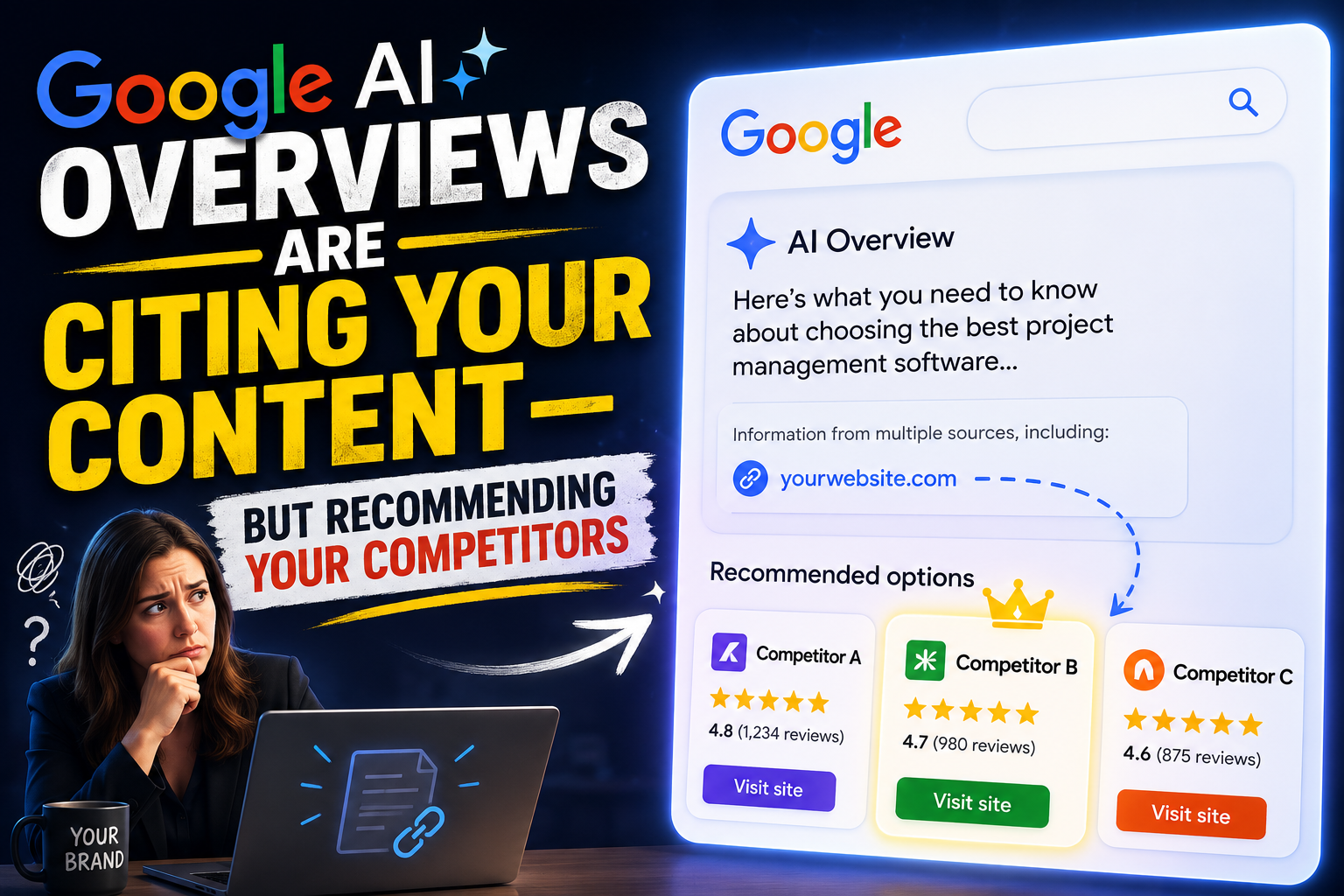
A recent study by SEO expert Lily Ray found that Google AI Overviews frequently cite self-promotional listicles as sources while recommending entirely different brands in the generated answer. In many cases, companies are effectively helping Google understand the market—only to see competitors receive the visibility and recommendations.
The Surprising Disconnect Between Citations and Recommendations
Ray analyzed 100 B2B searches using the format “best [category] software” across multiple dates between April and June 2026.
The findings revealed a consistent pattern:
- 80% of the queries triggered a Google AI Overview.
- Self-promotional listicles were cited 323 times.
- In 224 instances, Google cited a company’s content but did not recommend that company.
- Instead, Google frequently recommended competitors that were mentioned within the cited article.
In other words, Google’s AI appears willing to use a brand’s content as a source of information while independently deciding which products deserve recommendation status.
This represents a significant shift from traditional SEO, where ranking highly often translated directly into visibility and clicks.
Why Google Is Recommending Competitors
One example highlighted in the study involved a query for “best LMS for selling courses.”
Google cited a listicle published by Oasis LMS as a source. However, rather than recommending Oasis LMS, the AI Overview suggested alternative platforms including Kajabi, Thinkific, LearnWorlds, and Teachable.
Ironically, those competitors were all discussed within the Oasis LMS article itself.
This suggests Google’s AI systems are extracting information from content, evaluating broader signals of authority and popularity, and then generating recommendations based on factors that extend far beyond the source page.
Authority Matters More Than Self-Promotion
The research found that brands appearing in AI recommendations generally shared several characteristics:
Strong Brand Recognition
Companies with established market presence were more likely to be recommended.
Third-Party Validation
Brands frequently mentioned by independent publications, review sites, and industry experts performed better in AI-generated recommendations.
Strong Link Profiles
Traditional SEO authority signals still appear to influence which brands Google’s AI trusts most.
The takeaway is clear: AI search is placing greater emphasis on external credibility than on self-published claims.
The Decline of Self-Serving “Best Of” Pages
Many marketers have viewed self-ranked comparison pages as an easy growth tactic. However, the data suggests Google may be becoming increasingly skeptical of these formats.
According to Ray, numerous sites experienced organic traffic declines beginning in early 2026. The trend accelerated during Google’s May 2026 Core Update.
Common characteristics among affected sites included:
- Large numbers of self-promotional “best” pages.
- AI-generated content at scale.
- Excessive comparison pages.
- Aggressive SEO and GEO (Generative Engine Optimization) strategies.
The message appears to be that quantity alone is no longer enough. Google’s systems are increasingly evaluating trustworthiness, originality, and external validation.
Third-Party Sources Are Winning
Another notable finding from the research was Google’s growing reliance on independent and user-generated content sources.
Among the most frequently cited domains in AI Overviews were:
- Forbes
- YouTube
This reflects a broader trend in search where firsthand experiences, community discussions, and independent reviews are becoming increasingly influential.
For marketers, it means that earning mentions across trusted third-party platforms may provide greater value than publishing another self-promotional listicle.
What This Means for SEO and Content Strategy
The biggest lesson is that a citation is not the same as a recommendation.
Being cited in an AI Overview can help establish topical relevance, but it does not guarantee visibility, traffic, or brand preference.
To improve your chances of being recommended in AI search experiences, focus on:
Building Genuine Authority
Invest in thought leadership, original research, customer success stories, and industry recognition.
Earning Independent Mentions
Encourage reviews, analyst coverage, media mentions, and community discussions that validate your expertise.
Creating Unique Value
Instead of publishing another “best software” page, create content that offers original insights, data, or expertise unavailable elsewhere.
Strengthening Brand Signals
AI systems increasingly reward brands that are recognized and referenced across the broader web ecosystem.
The Future of AI Search
Google’s AI Overviews are changing how visibility works in search.
Traditional ranking factors still matter, but authority is no longer something brands can simply declare themselves. AI systems are looking beyond self-published content to determine who deserves recommendation status.
For SaaS and B2B marketers, this means the goal should shift from creating content that says you’re the best to building a brand that others recognize as the best.
In the AI search era, reputation may matter more than rankings.
One response
Hi, this is a comment.
To get started with moderating, editing, and deleting comments, please visit the Comments screen in the dashboard.
Commenter avatars come from Gravatar.